
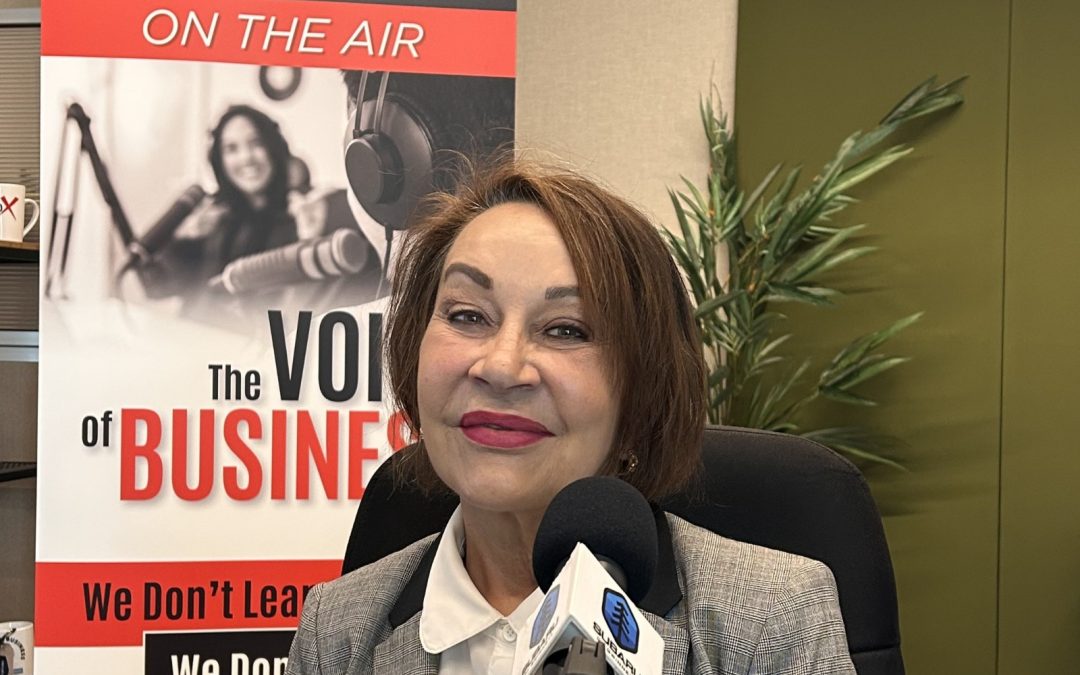
Most people don’t expect their mortgage broker to have started their career managing wealth on Wall Street. But that unlikely path is exactly what shaped how Sherry von Klitzing works today — and it’s why she’s become a go-to mortgage broker for business owners across Georgia, Alabama, Florida, North Carolina, and California, especially the ones a conventional bank has already turned down.
Sherry shared her full story recently on Gwinnett Business Radio International, and it’s worth understanding, because her background isn’t just a bio — it’s the reason her entire lending strategy exists.
From Merrill Lynch to a Career Reset After 9/11
Before mortgages, Sherry was a financial advisor and wealth manager in New York City with Merrill Lynch. She was living in the city through September 11, 2001 — an event she describes as the turning point that redirected her entire career. In the aftermath, she relocated to Florida, spent a brief period in real estate around Naples and Fort Myers, and by 2004 had moved into mortgage lending full-time with Washington Mutual Home Loans.
That timing placed her at the center of one of the most volatile periods in U.S. housing history. She worked directly with option ARM loans — a non-QM (non-qualified mortgage) product that gave borrowers multiple monthly payment choices. It was a legitimately useful tool for the right borrower, but it also became one of the products blamed for instability heading into the 2008-2009 housing collapse. Sherry watched that unfold from inside the industry, then relocated again to Atlanta, where she’s built her career for the two decades since.
Why She Understands Business Owners Better Than Most Lenders
Here’s the detail that explains everything else: Sherry has run her own business. While living in Vienna, Austria, she operated her own brokerage — giving her firsthand experience with something most loan officers only understand in theory: a profitable business can look far smaller on paper than it actually is, once legitimate tax deductions are factored in.
“They’re making a lot of money, they have a lot of legitimate tax write-offs that they take — and why not?” she explained. “Those type of people have trouble getting a conventional mortgage.” That single insight is the foundation of her entire specialty. She built her practice specifically around business owners, 1099 earners, and self-employed borrowers across Georgia, Alabama, Florida, North Carolina, and California — clients whose tax returns tell an incomplete story about their finances, a documentation gap the Consumer Financial Protection Bureau has long acknowledged as a genuine barrier for self-employed borrowers under standard underwriting.
Bank Statement Loans Explained
Rather than treating every borrower like a standard W-2 file, Sherry calls herself a “strategic financing and housing consultant” — someone who builds a lending approach around how a client actually earns and manages money, not just what a tax return shows.
For self-employed borrowers, her primary tool is the bank statement loan. Here’s how it works:
- The borrower provides 12 or 24 months of personal or business bank statements
- Income is calculated from actual deposits — not tax returns, not W-2s
- Standard guidelines allow 50% of that income to count toward qualification
- If the business’s operating costs run below 50% of revenue, that can increase to as much as 70%
For a business owner whose accountant has spent years minimizing taxable income, this approach often qualifies them for a loan amount a conventional lender would never approve, using the same underlying financial picture.

Strategic Options for Investors and Retirees
Business owners aren’t the only clients Sherry works with. Her strategist mindset extends to two other borrower types conventional lending often overlooks:
Real estate investors — including W-2 employees who’ve built rental portfolios on the side — can qualify using DSCR (Debt Service Coverage Ratio) loans. Instead of evaluating the borrower’s personal income, this loan type looks at whether a property’s rental income covers its own carrying costs: principal, interest, taxes, and insurance.
Retirees with significant assets but limited active income have options too. Sherry described a strategy where qualifying retirement assets are amortized over a five-year period to establish income for underwriting purposes — without using those assets as collateral. For homeowners with substantial home equity instead, reverse mortgages offer another path to stay in place while accessing that value.
Turned Down by a Bank? Here’s Why That’s Not the End of the Road
One of the most important things Sherry wants borrowers to understand: being denied by one lender doesn’t mean you’re not financeable. It usually means you didn’t fit that particular lender’s guidelines — not that no guidelines exist for your situation.
That’s the direct result of how she operates. As a licensed mortgage loan originator working through Barrett Financial Group, Sherry has access to more than 200 different lenders and investors, and guidelines vary significantly between them — even within the same loan category. “It’s like going to Walmart and looking for the best or the perfect thing that you want to get,” she said. When one lender’s box doesn’t fit, another one often does. Shopping a file across dozens of lenders — rather than relying on a single bank’s yes-or-no — is frequently what turns a rejection into an approval.
Refinance or HELOC? Breaking Down the Difference
With U.S. credit card debt having climbed past $3 trillion, Sherry gets asked constantly whether homeowners should refinance their mortgage or take out a home equity line of credit (HELOC) instead. Her answer depends entirely on the goal:
| Scenario | Better Fit |
|---|---|
| You already have a low mortgage rate | Neither — a full refinance rarely makes sense here |
| You want to pay off high-interest credit card debt | HELOC, often at a lower rate than card debt |
| You want to fund home improvements | HELOC or cash-out refinance, depending on rate |
| You’re a self-employed borrower reinvesting in your business | HELOC to access equity without disturbing your first mortgage |
| An investor wants capital for another property | HELOC or cash-out refinance, depending on equity position |
Most HELOC structures she works with allow a five-year draw period before the balance amortizes over 10 to 15 years — giving borrowers real flexibility in how aggressively they pay it down.
Mortgage Market Outlook Across GA, AL, FL, NC & CA: What She’s Seeing Heading Into Q4 2026
On where rates are headed, Sherry was direct: they’ve stayed volatile throughout 2026, moving up and down without a clear sustained trend in either direction — a pattern she’s watching across all five states where she’s licensed: Georgia, Alabama, Florida, North Carolina, and California. She shared a recent example from her own pipeline — a DSCR loan for an investor client that priced around 7.75% back in August, then improved to 7.125% by the time the loan was ready to close weeks later.
Her guidance for borrowers waiting for rates to drop further before making a move: if a purchase, refinance, or investment opportunity fits your broader financial strategy, it’s often better to move forward than wait indefinitely. As she put it, “you can always refinance when we see an improvement” — but the property or opportunity in front of you today may not still be available later.
(Rate figures reflect Sherry’s professional observations at the time of recording and are not a guarantee of current or future rates or loan terms.)
Frequently Asked Questions
What makes someone a good fit for a bank statement loan?
Self-employed borrowers and business owners whose tax returns understate their real income due to legitimate deductions are typically the strongest fit — this loan type qualifies based on deposits, not reported taxable income.
If one bank denies my mortgage application, does that mean I don’t qualify anywhere?
Not necessarily. Lender guidelines vary widely, even within the same loan category. A denial usually means you didn’t fit that specific lender’s criteria — not that no program exists for your situation.
Should I refinance my mortgage or take out a HELOC to pay off debt?
If your existing mortgage rate is low, a HELOC to target high-interest debt specifically is often more efficient than refinancing the entire loan. The right choice depends on your rate, your equity, and your goal.
How do DSCR loans work for real estate investors?
DSCR loans qualify borrowers based on whether a rental property’s income covers its own mortgage, tax, and insurance costs — rather than evaluating the investor’s personal income directly.
Is now a good time to buy or refinance given current rate volatility?
Rates have moved without a clear sustained trend. Rather than trying to time the market, it’s worth evaluating whether a purchase or refinance fits your current financial goals — you can pursue a refinance later if conditions improve.
Hear the Full Conversation
Sherry’s complete interview covers even more detail on strategic lending for business owners, investors, and retirees. Listen to the full episode of Gwinnett Business Radio International, presented by Subaru of Gwinnett, on Apple Podcasts, Spotify, or iHeartRadio.
If you’re a business owner, investor, or homeowner weighing a refinance decision anywhere in Georgia, Alabama, Florida, North Carolina, or California, explore our non-traditional mortgage programs, review our full range of mortgage services, or schedule a free consultation directly with Sherry to talk through your own situation.